Per-resolution pricing is the dominant way AI support gets sold right now, and I think it is a trap. The mechanics are simple: you pay for each conversation the AI resolves. Intercom's Fin set the reference point at $0.99 per resolution, and Zendesk prices its AI the same way. The pitch writes itself: pay for outcomes rather than software. If the bot resolves nothing, you owe nothing. What could be fairer?
Quite a lot, as it turns out. But the argument for the model deserves a fair hearing first.
The steelman
Per-resolution pricing answers a real fear: paying for AI that does not work. Tying the vendor's revenue to delivered outcomes pushes the trial risk to nearly zero. If the bot is useless, the bill is zero, so a buyer can say yes without a leap of faith, and the vendor has every commercial reason to make the product genuinely resolve things. For anyone who has been burned by shelfware, "pay only when it works" is an attractive contract, and honestly a rational one to offer a skeptical market.
If I sold support AI by the resolution, this is the pitch I would make, and I would mean every word. The pitch is honest as far as it goes. What it leaves out is what the meter does to everyone's behavior after the contract is signed.
Where the incentives bend
Follow the money through five turns.
First, the vendor now profits from maximizing resolutions. Every conversation the bot keeps away from your team is revenue, including the ones that should have reached a human three messages earlier. Expect the defaults to lean accordingly: the bot holds on a little longer, the exit to a person sits one level deeper, the counting runs generous.
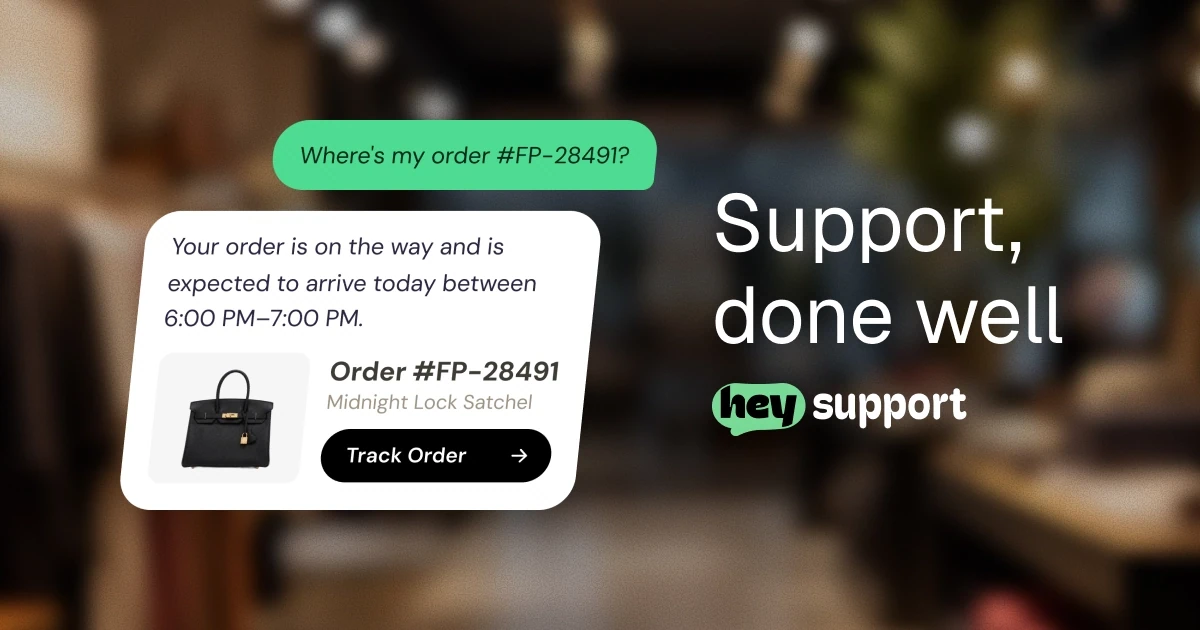
Second, "resolved" is defined by the seller. In most schemes it means the AI answered and the customer did not push through to a human. A customer who got a wrong answer and gave up looks identical, in the data, to a customer who got helped. One of them is writing a one-star review right now. Both are billable.
Third, your best months become your biggest bills. A product launch lands, a creator mentions you, holiday traffic triples. Under flat pricing that is a good week. Under per-resolution pricing it is an invoice that arrives after the fact, priced at the peak. The tax compounds, too: the months when volume spikes are exactly the months when cash is already stretched by inventory, ad spend, or launch costs.
Fourth, seasonal businesses cannot budget. Take an illustrative store: 700 conversations in a normal month, 2,500 in December. If the bot resolves around 70 percent, that is roughly 490 billable resolutions in a normal month against 1,750 in December. At Fin's $0.99, about $485 against roughly $1,730. The December number might be defensible on its own. The impossibility of predicting it back in July is the actual problem. A viral moment should be good news, and under this model it is a line item you brace for.
Fifth, and this is the one I keep coming back to: it meters the exact thing you want customers to do more of. Questions are pre-purchase intent. Questions are post-purchase trust. The whole premise of putting AI support on your site is that answering instantly, at any hour, is good for business. This model attaches a price to every question answered, so you end up wanting fewer of the thing you bought the tool to encourage. Support conversations are also where the next sale starts, which makes metering them a strange choice, a bit like a shop charging itself rent per customer who walks in.
The rationing effect
Here is what those distortions add up to in practice. Teams under a resolution meter start managing the meter. The widget comes off high-traffic pages. It gets hidden on mobile. Someone proposes steering more visitors to the contact form to control AI spend, and support quietly becomes a cost center again, with worse UX than before the AI arrived, because now the humans sit behind the bot and the bot sits behind a budget.
The predictable end state is a spreadsheet that tracks the AI bill by week, owned by someone who never wanted to own it. A job created entirely by a pricing model.
None of these teams are being irrational. They are responding correctly to the price signal. That is the trap: the pricing model ends up redesigning your support experience around itself.
What flat pricing changes
Flat plans with conversation pools change three specific things. The cost is knowable in advance, which sounds mundane until you have tried to budget the other kind. No vendor revenue rides on the definition of "resolved", so nobody profits when your customer gives up. And a good month costs the same as a quiet one, so growth is never taxed. Budgeting stops being a forecasting exercise and becomes a line you copy from last month.
The tradeoff, stated plainly: in a quiet month you pay for pool you did not fully use, and the vendor carries the risk of heavy months. We accept both sides of that. Capacity pricing is how almost everything else you run is sold; your hosting bill does not ask how valuable the visits were.
One caveat, because flat pricing has its own failure mode: "unlimited" with a fair-use clause nobody defines is a meter wearing a costume. Pools with real numbers printed on the pricing page are the honest middle ground. You know the cap, you can see it coming, and nobody gets a surprise email about your usage patterns.
This is the model we chose for Hey Support, and disagreeing with the industry on pricing was half the reason we built the product at all. Plans run from a free 50-conversation tier through Scale at 20,000 a month, and the numbers live on the pricing page. As for what happens at the caps: the pools are deliberately generous, and if you outgrow one, we talk to you about the next plan. We do not bill per answer, and the price you join at holds, which is written into the terms rather than into a blog post.
Questions to ask any vendor
Four questions sort this out quickly, whatever the pricing model in front of you. None of them are rude, all of them are clarifying, and the reaction to being asked is itself useful data.
- Who defines "resolved", and can I audit the conversations that counted toward my bill?
- What would my busiest month last year have cost under this model? Run your own numbers through it, never the vendor's example.
- What happens at three times my current volume: same rate, a price cliff, or a sales call?
- Do prices hold for existing customers, and is that in the terms or just on the website today?
A vendor with straight answers to all four is probably fine to buy from under any model. A vendor who cannot answer the busy-month question has answered it. The wider cost comparison, per resolution against per seat against flat pools with the math side by side, is in our AI customer support guide.
Pricing is product design. It tells you what a vendor wants you to do less of, more honestly than any homepage copy does. Per-resolution pricing wants you thinking about volume. Flat pricing wants you to forget the meter exists, because there is no meter. I know which product I would rather run, and more to the point, which one I would rather be a customer of.